I must admit, I had a lot of hope for the last exercise I had in mind for the kids to do! I explained to them the basic functions of the camera :
Turning Power on / off
Flash on / off
Recording and Viewing Mode
I did not know, that they were going to go nuts, which well, is absolutely silly on my part.
I gave them the cameras telling them that they must each go find an object that they like and dislike. This object would need to be clicked in its environment in as many angles or placements as possible.
They were all really excited about it and ran off into the community to go capture these shots.
Well, no, NOT REALLY!
They came back with all sorts of random pictures having completely forgotten about the exercise. Either that, or one out of all the images was "something they liked or disliked."
Don't get me wrong! I am very amused and I'd love to share with you a few of the images that they did click that have nothing to do with the activity. I'm taking this enthusiasm to capture friends and family as an insight into the social belonging these kids feel by clicking such pictures. And by showing these pictures, they are only spreading joy and smiles through the community.
First Clicks
Monday, August 9, 2010

Overnight in Bangalore
This is a summary of my second review with my Panel at Srishti.
In this review, I discussed my plans for the next few classes and the feedback I received has helped me change the structure of what will follow.
- Pay less attention to technique and more to expression itself.
- Let the children tell stories rather than be told what to do.
- Focus on urging them to shoot images that capture their everyday life and not just things that amuse them.
- How does the child see the world? I must not try and enforce my aesthetics on them, rather, appreciate the vision they have, without being directed on composition and perspective.
- What is the net importance of the subject rather than the realistic one?
- What is reality for them?
- What do the dream of? The difference between dreams and dream vision.
- Can I get them to create a narrative with the pictures?
- The final outcome of the exhibition should treat them as CO-CREATORS. It is important not to focus on each child and their images, but make it more of a community pool of images so all of them are enthusiastic about adding to this pool and being a part of it.
A thank you to Ravindra, Sabina and Sanjay - my panel.
I would also like to thank Geetanjali Sachdev, Rustam Vania and Ampat Varghese who have been giving me additional guidance even though they are not on my panel. Will be sharing their feedback soon on the new resources tab I must create!
Pin Hole Cameras
Weekend Batch
I introduced the idea of PHOTO-GRAPHY being LIGHT-WRITING.
I want the kids to start looking at photography not as work, but a language in itself. Something like Hindi or Marathi, explaining to them that the same way they use words to express themselves in a language, light writing is a new language and they can use images to express themselves.
In order for them to understand how this light works, I decided that getting them to make their own pin hole cameras would be a fun exercise, during which, the basic details of the colors Black and White can be explained.
Also, the fact that images are seen by the eye up-side-down and the brain then flips it. The pin hole camera is the best way to explain this fact!
We opened up old cartons found easily at the store nearby and started creating the cameras in groups.
Painting the inside of the box black, to understand how black doesn't reflect light and hence will help in capturing a clearer image.


Clearly I am unable to manage the enthusiasm with which these children respond to the activites. They were very amused by the masking tape and decided it would look good on my face. I guess, their sense of aesthetics is very different from mine!


I introduced the idea of PHOTO-GRAPHY being LIGHT-WRITING.
I want the kids to start looking at photography not as work, but a language in itself. Something like Hindi or Marathi, explaining to them that the same way they use words to express themselves in a language, light writing is a new language and they can use images to express themselves.
In order for them to understand how this light works, I decided that getting them to make their own pin hole cameras would be a fun exercise, during which, the basic details of the colors Black and White can be explained.
Also, the fact that images are seen by the eye up-side-down and the brain then flips it. The pin hole camera is the best way to explain this fact!
We opened up old cartons found easily at the store nearby and started creating the cameras in groups.
Painting the inside of the box black, to understand how black doesn't reflect light and hence will help in capturing a clearer image.


Masking the box with duct tape so that no light escapes through tiny crevices.

Each group had to come up with a name for themselves. Are you as surprised as I was?


The proud Camera Manufacturers!


Imaginary Cameras and Framing II
Batch II - Weekday batch


I will be doing the same exercises with both batches. The only difference being, I can apply changes in the batch that goes after, as I can learn from the mistakes / responses from the previous class. This was my first class with the Weekday batch




Monday, August 2, 2010
Imaginary Cameras and Framing


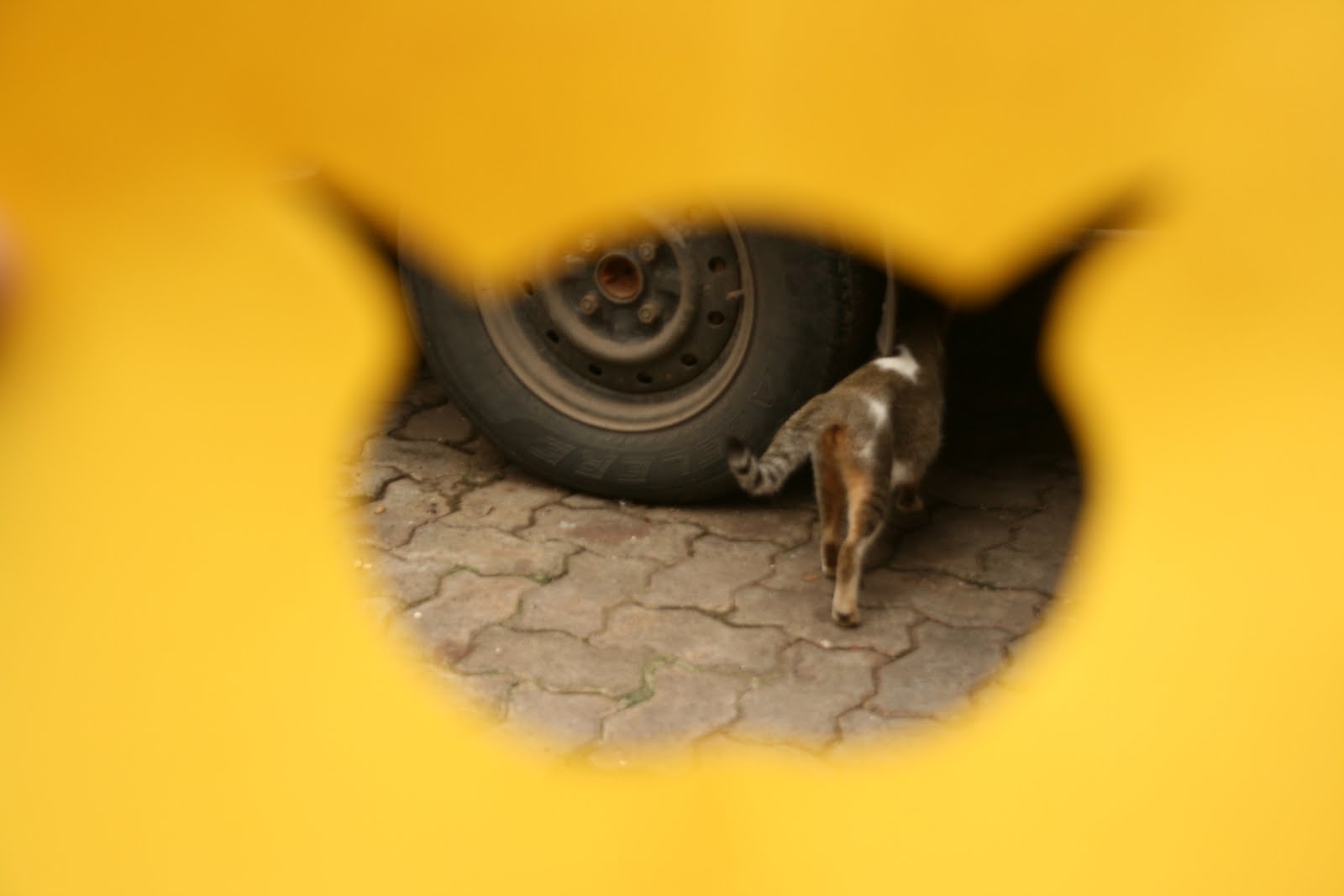
Its pretty simple, I gave them paper - they could chose the color, and told them to make windows in the paper of any size, shape or kind. I asked them what shape the frame is of a photograph, they all knew it was a rectangle or square and so, I asked them, to make any frames they'd like they're camera to have instead of a square or rectangle. To make it more exciting, I told them to think of what exactly they would like to use the frame to click a picture of. It could be many things, but why this shape and this picture?
Shivani and I, then walked around with them, telling them to show us what they would like to click mental images of and made them use the window to frame that image.


The aim for this class was to get them excited about the workshops and to make them think a little out of the box. I think we got through to them, because, they were wondering if they could use the frames to click more pictures with their minds. I am not going to be giving the kids any real homework as such, I want this class to be like a stress buster for them and make them want to click photos out of pleasure, not force.
This would be impossible alone - Welcome aboard Shivani!
After seeing the response, and realizing there will be more than 10 kids in a class - I panicked. Kids are cute, but they are also scary. They get bored easily and start running around quickly. Yes, I am a bit scared of them in large groups, because they tend to love doing what you tell them not to.
I was discussing my project, with friends and family and hadn't really decided to ask anyone to volunteer to help. But a a friend of mine, who saw my blog, and is currently doing a photography course at JJ School of Arts, wanted to volunteer with the classes.
Hence, I'm very happy to say that Shivani Mutha will be volunteering at the classes for the next 2 months! Thanks Shivani! I'm going to be allowing her to post stuff on the blog as well, so you guys can hear her perspective whenever she chooses to share it!
I was discussing my project, with friends and family and hadn't really decided to ask anyone to volunteer to help. But a a friend of mine, who saw my blog, and is currently doing a photography course at JJ School of Arts, wanted to volunteer with the classes.
Hence, I'm very happy to say that Shivani Mutha will be volunteering at the classes for the next 2 months! Thanks Shivani! I'm going to be allowing her to post stuff on the blog as well, so you guys can hear her perspective whenever she chooses to share it!
What is Photography to you?
The first class, has 16 students.
I decided to start with the simple question :
"What do you click a photograph for?"
Various answers were given :
"If I see something I like, I would want to take a picture"
"If something looks pretty, we may want to see it again"
"If I am with my friends, I will want to take a picture"
This ofcourse, being the first question I asked, was answered with apprehension, because the children are so used the giving "right" or "wrong" answers. I realized this when I asked Prajyot to answer the question - he said "What they are saying is the correct answer I think."
This was an important moment for me, because, I think I had forgotten all the unlearning I had to do in Srishti. And I have to give these kids time to unlearn some stuff too. So, this being said, we had a discussion about how nothing is right or wrong, and everything must be explored in photography and the beauty is no one is ever wrong! This seemed to get them a little less nervous.
I had a 20 minute discussion with the kids about what photography is used for around the world. First I asked them to help me list this stuff :
People
Animals
Colors
Buildings
Birds
flowers
Nature
Family
Picnics
Traveling
Friends
Cars
Trees
So Photography, according to them must always have a subject - a physical identifiable subject (The only exception and abstract one being color).. No emotions were expressed. I did try and probe and ask - But why would you click something?
It seems, as though, emotions are not something they identify with photography immediately. Emotions are derived from a photograph or through the subject in the photograph. But I view photography differently - I never think of subjects first, I think of what emotion I am trying to evoke, what story am I trying to tell. And I think thats what we do, once we've gone past the stage of clicking away on a new camera. What are we trying to say / show / depict / evoke?
Taking advantage of the fact, that none of the kids really mentioned it, I brought it up.
So what do you feel, when you see a picture ? I asked.
Then the answers came in - Happiness or Sadness.
Kids are simple, they see thing in black and white most of the time.
So with some pictures they said they felt happy and with some they felt sad.
At this point I said, why does a photographer click a picture of something that will make you sad?
No answers! I had 16 blank faces and they had to be introduced to the idea of clicking pictures, to share information, to let other people experience what they see. This is when one of them said - "Yes, like for the Newspaper?"
Hence, with this discussion, I covered very basic ideas of what photography can be used for and why.
The key is to not get over complicated at first. I have kids in the class ranging from age 11 - 15 and one girl who is 23.
I decided to start with the simple question :
"What do you click a photograph for?"
Various answers were given :
"If I see something I like, I would want to take a picture"
"If something looks pretty, we may want to see it again"
"If I am with my friends, I will want to take a picture"
This ofcourse, being the first question I asked, was answered with apprehension, because the children are so used the giving "right" or "wrong" answers. I realized this when I asked Prajyot to answer the question - he said "What they are saying is the correct answer I think."
This was an important moment for me, because, I think I had forgotten all the unlearning I had to do in Srishti. And I have to give these kids time to unlearn some stuff too. So, this being said, we had a discussion about how nothing is right or wrong, and everything must be explored in photography and the beauty is no one is ever wrong! This seemed to get them a little less nervous.
I had a 20 minute discussion with the kids about what photography is used for around the world. First I asked them to help me list this stuff :
People
Animals
Colors
Buildings
Birds
flowers
Nature
Family
Picnics
Traveling
Friends
Cars
Trees
So Photography, according to them must always have a subject - a physical identifiable subject (The only exception and abstract one being color).. No emotions were expressed. I did try and probe and ask - But why would you click something?
It seems, as though, emotions are not something they identify with photography immediately. Emotions are derived from a photograph or through the subject in the photograph. But I view photography differently - I never think of subjects first, I think of what emotion I am trying to evoke, what story am I trying to tell. And I think thats what we do, once we've gone past the stage of clicking away on a new camera. What are we trying to say / show / depict / evoke?
Taking advantage of the fact, that none of the kids really mentioned it, I brought it up.
So what do you feel, when you see a picture ? I asked.
Then the answers came in - Happiness or Sadness.
Kids are simple, they see thing in black and white most of the time.
So with some pictures they said they felt happy and with some they felt sad.
At this point I said, why does a photographer click a picture of something that will make you sad?
No answers! I had 16 blank faces and they had to be introduced to the idea of clicking pictures, to share information, to let other people experience what they see. This is when one of them said - "Yes, like for the Newspaper?"
Hence, with this discussion, I covered very basic ideas of what photography can be used for and why.
The key is to not get over complicated at first. I have kids in the class ranging from age 11 - 15 and one girl who is 23.
Subscribe to:
Posts (Atom)